Every concrete structure will eventually need repair. The question isn't if but when, and more importantly, how. The difference between a repair that lasts 20 years and one that fails in 2 comes down to proper diagnosis, material selection, and execution.
Diagnosing the Problem
Before you pick up a trowel, you need to understand why the concrete failed. Surface cracks, spalling, delamination, and structural cracking each have different root causes and require different repair strategies. A crack caused by plastic shrinkage needs a very different approach than one caused by ongoing structural movement.
The most common diagnostic mistake is treating symptoms instead of causes. Patching a crack caused by active settlement without addressing the settlement itself guarantees the crack will return.
Crack Injection and Sealing
For non-structural cracks, epoxy or polyurethane injection remains the gold standard. Epoxy injection restores the original tensile strength across the crack plane, while polyurethane injection provides a flexible seal that accommodates minor movement. The choice between them depends on whether the crack is dormant or active.
Full-Depth Repair Techniques
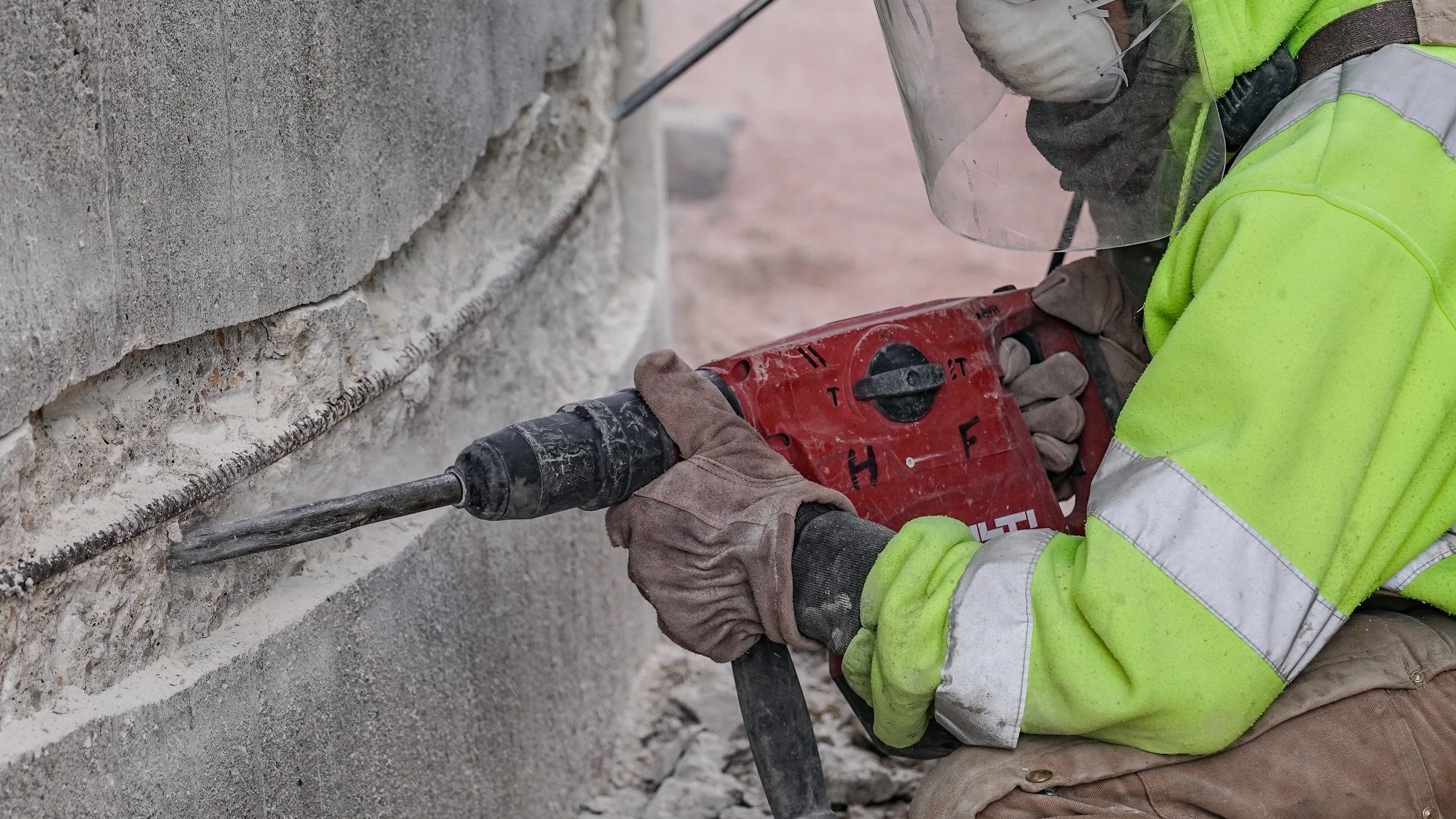
When damage extends beyond surface-level, full-depth repair is necessary. This involves saw-cutting the perimeter of the damaged area, removing deteriorated concrete to sound substrate, preparing the surface, and placing a compatible repair material. The critical steps that most contractors rush through are surface preparation and curing. A poorly prepared substrate will cause delamination regardless of how expensive your repair mortar is.
Material Selection Matters
The repair material must be compatible with the existing concrete in terms of modulus of elasticity, thermal expansion coefficient, and bond strength. Using a high-strength, fast-setting repair mortar on a low-strength substrate is a recipe for failure. The repair material should be slightly weaker than the surrounding concrete to prevent stress concentration at the repair boundary.
Keys to Long-Lasting Repairs
- Always identify and address the root cause before repairing
- Never skip surface preparation, even when the schedule is tight
- Match repair material properties to the existing concrete
- Follow manufacturer curing requirements to the letter
- Document your process for warranty and quality assurance purposes
Found this useful? Share it with your crew.