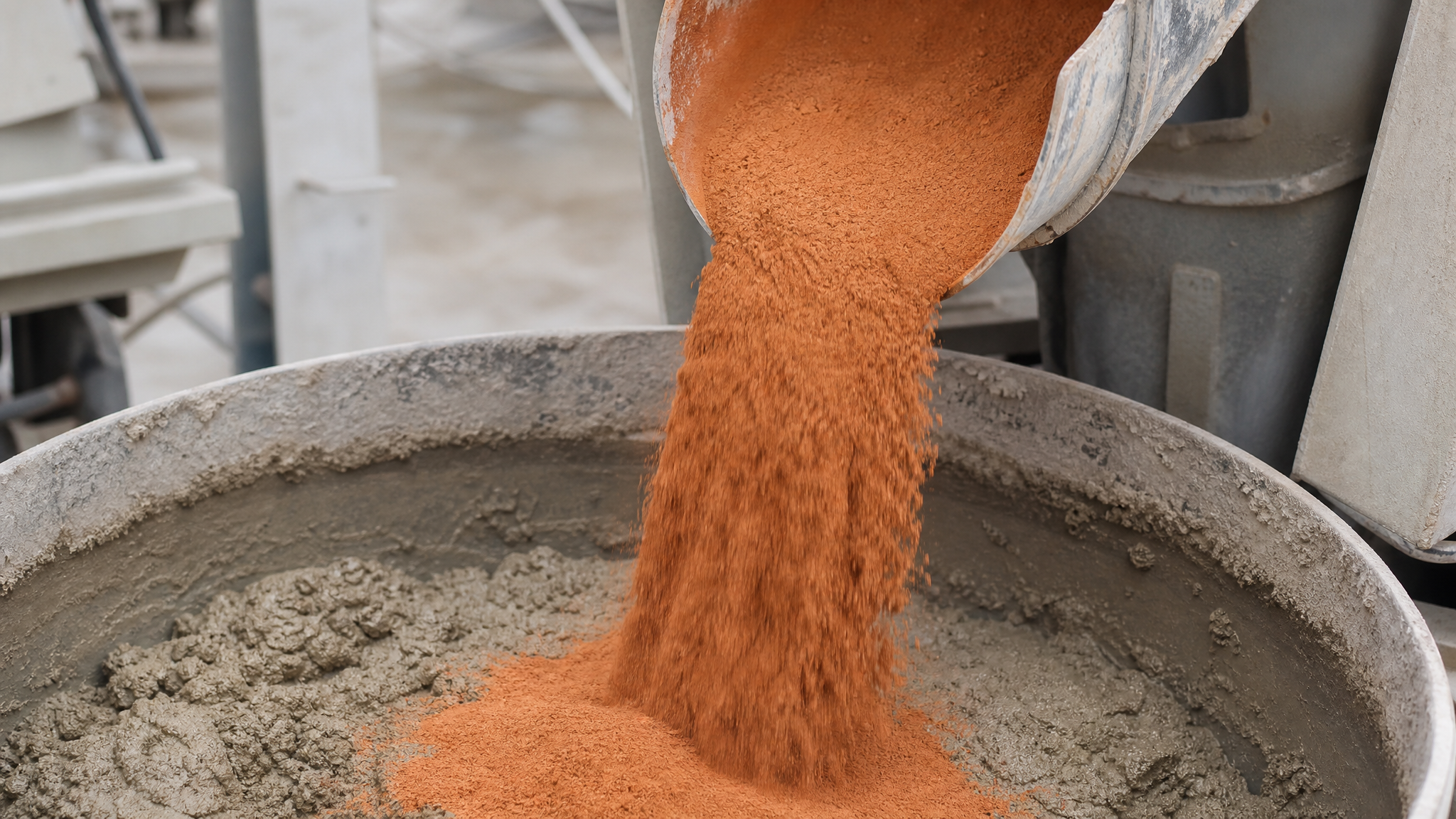
March 3, 2025, I was patiently waiting at the Delta luggage carousel in the Denver airport when a surprise conversation changed my life. Coincidentally, several industry friends had taken the same flight from Atlanta to attend Spring ACI meetings. They approached me with a question I didn't think I would ever hear: Could you make calcined clay to replace up 30% of Portland cement in our ready mixed concrete?
Fast forward to today, Holcim announces they're going to hit a million tons of calcined clay cement production in 2026. That's not an anecdote from baggage claim. That's a signal. That's the industry saying, okay, we're doing this for real now.
A Signal From the Industry
I had Kas Farsad on the podcast a few months back. He runs Fortera out in Silicon Valley, and he's been grinding on new cement chemistry for almost two decades. Two decades. And the thing he said that stuck with me was that the concrete industry doesn't adopt bad new things. They just look like they're slow. But when they move, they move with purpose. And I think we're watching that happen right now with calcined clay.
Why Now? The SCM Supply Shift
For years, the go-to supplementary cementitious materials were fly ash and slag. And they work great. It's no secret that virgin fly ash is getting harder to find because we're shutting down coal plants, and slag supply is just not keeping up with demand. The beneficiated ash has been a welcomed product, even if we wish the price would go back to match virgin ash. But that doesn't totally explain why my friends were suddenly so interested in calcined clay. What changed?
Two things happened at the same time:
- Data centers became the fastest growing project type
- The folks building the data centers want to lower the carbon footprint of their concrete by a factor that requires additional SCMs
Calcined Clay Steps Up
That's where calcined clay comes in. It's not a new idea, but the scale is new. The replacement rates are new. The commitment is new. And for me, it came at a time when another source fell short of commercialization. My friends at baggage claim were ready to move forward on projects utilizing calcined clay when their source disappeared on them. Now Fall Line Minerals is picking up the slack to supply the market.
Trust Is the Hard Part
The chemistry's not the hard part anymore. The trust is the hard part.
I was talking to a producer down in the Southeast not long ago and he said something that I thought was really sharp. He said, "Paul, I don't mind change. I mind surprises." And that's exactly right. The job of anybody selling into this industry is to eliminate the surprises. You do that through testing, through transparency, through being honest about what the product does and what it doesn't do. And then you show up when there's a problem and you help figure it out.
Looking Ahead: ConcreteWorks 2026
ConcreteWorks 2026 is coming up in Nashville in October, and I'm already thinking about the conversations we're going to have there. Because that show is where the real talk happens. Not the booth talk, not the brochure talk. The hallway talk. The dinner table talk. And I'd bet good money that calcined clay is going to be a big part of those conversations this year.
The Call to Action
So if you're a producer who's been curious but hasn't pulled the trigger yet, I'd say now's a pretty good time to start asking questions. Find somebody who's running it, ask them what they learned, ask them what they'd do differently. That's how this industry has always moved forward. Not through white papers alone, but through people talking to people.
And if you want to talk about it, you know where to find me.
Found this useful? Share it with your crew.